










The Best Plug Certified Apple Watch for Fitness Enthusiasts: A Guide to Tracking, GPS & Heart Rate Accuracy
Updated on | 10 mins readThe Best Plug Certified Apple Watch for Fitness Enthusiasts: A Guide to Tracking, GPS & Heart Rate Accuracy
Picture this: You’ve just finished the most grueling 10K run of your life. You pushed through the final mile, breathless but triumphant, certain you just crushed your personal record. You look down at your wrist to confirm your time, only to discover your watch lost its GPS signal two miles back, and your heart rate data looks like a flatline.
For fitness enthusiasts, few things are more frustrating than technology failing when you need it most. Whether you're training for a marathon, optimizing your HIIT intervals, or tracking your lap times in the pool, the accuracy of your wearable device isn't just a fun bonus—it's the foundation of your training progress.
But with so many Apple Watch models on the market, choosing the right one for your specific athletic needs can feel overwhelming. Do you really need dual-frequency GPS? How accurate is the heart rate monitor? And what does it mean to choose a Plug Certified device for your fitness journey?
Grab your water bottle, and let’s dive into everything you need to know about selecting the perfect Apple Watch to elevate your training.
What Makes an Apple Watch "Plug Certified" (And Why It Matters for Athletes)
Before we get into the nitty-gritty of sensor technology, let’s talk about reliability. When you're mid-workout, you need to know your tech won't quit on you.
Buying brand-new electronics can carry a hefty premium, which is why many athletes look for smarter ways to upgrade their gear. A Plug Certified Apple Watch bridges the gap between top-tier performance and affordability.
When an Apple Watch is certified by Plug, it means the device has undergone a rigorous testing and cleaning process to ensure it meets strict functionality and appearance standards. The sensors are checked, the battery health is verified, and the GPS capabilities are tested. Because Plug believes in the reliability of this process, every device is backed by Plug's 12-Month Warranty and a 30-day hassle-free return policy. You get the elite fitness tracking you need, with complete peace of mind, at a price that leaves plenty of budget left over for your gym membership or race fees.
Cracking the Code: GPS Tracking Accuracy Explained
If you run, cycle, or hike outdoors, GPS accuracy is arguably the most critical feature of your fitness tracker. But not all GPS systems are created equal.
Single-Frequency vs. Dual-Frequency GPS
Most standard smartwatches use Single-Frequency GPS (L1). This technology pings satellites to determine your location, and for a casual jog around a suburban neighborhood, it works beautifully.
However, if you've ever run a marathon through a major city, you might have noticed your route map looked a bit jagged afterward. Tall buildings, dense forest canopies, and deep canyons can block or bounce single-frequency satellite signals, causing your watch to think you're zig-zagging across the street when you're actually running in a straight line.
Enter Dual-Frequency GPS (L1 + L5). Found in premium models like the Apple Watch Ultra series, this system connects to a second band of satellite signals. By using both bands simultaneously, the watch can filter out signal errors caused by bouncing off skyscrapers or trees. The result? Pinpoint accuracy for your pace, distance, and route maps, no matter how challenging the environment.
Heart Rate Monitoring: How Apple Watch Sensors Actually Work
Your heart rate dictates your training zones, your estimated calorie burn, and your recovery metrics. But how exactly does a watch measure what's happening inside your veins?
The Science Behind the Green Lights
If you peek under your Apple Watch during a workout, you'll see flashing green LED lights. This is a technology called Photoplethysmography (PPG). Blood is red because it reflects red light and absorbs green light. Your watch flashes green lights hundreds of times per second to detect the amount of blood flowing through your wrist. During a heartbeat, blood flow (and green light absorption) is high; between beats, it's less.
Apple pairs this with highly advanced algorithms to translate those light fluctuations into a remarkably accurate heart rate reading.
The "Tattoo Effect" and Environmental Factors
Here is an "aha moment" for many athletes: if you have a sleeve of dark tattoos on your wrist, you might struggle with heart rate accuracy. Why? Because solid, dark ink can actually block the green light from penetrating your skin and reading your blood flow. If this sounds like you, try wearing the watch on your other wrist, or consider pairing your Apple Watch with a Bluetooth chest strap for workouts.
Additionally, cold weather can affect accuracy. When you run in freezing temperatures, your body naturally pulls blood away from your extremities (like your wrists) to keep your core warm. Less blood flow at the wrist means a weaker signal for the watch's sensors. Warming up properly can help mitigate this!
Matching the Watch to the Workout
Different athletes have different needs. Here is how to match your training style with the right Plug Certified Apple Watch category:
The Long-Distance Runner & Triathlete
What you need: Extreme battery life, dual-frequency GPS, and rugged durability.The Ideal Match: The Apple Watch Ultra line. With its titanium case, massive battery capacity that can survive an Ironman triathlon, and dual-frequency GPS, it is the ultimate endurance companion.
The Gym Goer & HIIT Enthusiast
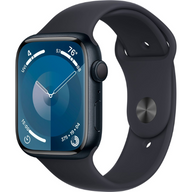
What you need: Fast heart-rate responsiveness, crack-resistant screens (hello, kettlebells), and detailed workout metric displays.The Ideal Match: The Apple Watch Series 8 or Series 9. These models offer brilliantly bright screens for quick mid-rep glances, advanced health sensors (like blood oxygen and ECG), and robust dust and crack resistance.
The Swimmer & Casual Jogger
What you need: Water resistance, reliable basic tracking, and a lightweight feel.The Ideal Match: The Apple Watch SE. It strips away the advanced health sensors (like ECG) but keeps the core fitness tracking, heart rate monitoring, and swim-proof water resistance, making it an incredibly affordable, high-value entry point.
Pro Tips: Optimizing Your Apple Watch for Peak Performance
Even the most advanced Plug Certified Apple Watch needs a little user optimization to perform at its absolute best. Keep these tips in mind:
- Tighten the Strap: A loose watch cannot read your heart rate accurately. During workouts, your watch strap should be snug enough that it doesn't slide around, but not so tight that it restricts circulation.
- Calibrate for Accuracy: When you first get your watch, take it for a 20-minute outdoor walk or run on flat terrain with clear skies. This helps the watch calibrate its internal accelerometer to your specific stride length, ensuring accurate indoor treadmill tracking later on.
- Use Quality Chargers: Always charge your device with certified cables. Reliable charging protects your watch's battery health over time, ensuring it won't die on you in the middle of a two-hour long run.
- Leverage the Action Button: If you choose an Ultra model, map the physical "Action Button" to start your workout instantly. It's a lifesaver when your fingers are sweaty or you're wearing gloves.
Frequently Asked Questions (FAQ)
Do I need a Cellular Apple Watch for fitness tracking?
Not necessarily! A GPS-only Apple Watch will still track your distance, pace, and heart rate accurately without your iPhone nearby. It will simply sync all that data to your iPhone once you are back in range. However, if you want to stream music, take emergency calls, or text without carrying your phone on a run, a Cellular model is the way to go.
Will continuous heart rate tracking drain my battery?
Yes, using the active workout mode (which checks your heart rate continuously rather than periodically) consumes more power. If you are going for a multi-hour hike or marathon, you can activate "Low Power Mode" during workouts. This preserves battery life by reducing the frequency of heart rate and GPS readings, though it may slightly reduce the tracking precision.
Can I swim with my Apple Watch?
Absolutely. Apple Watches from Series 2 onward are water-resistant up to 50 meters (and the Ultra is rated to 100 meters). They even feature a clever "Water Lock" that prevents accidental screen taps from the water and physically ejects water from the speaker using a burst of sound when you finish your swim!
How does an Apple Watch compare to a dedicated running watch?
While dedicated running watches are fantastic, the Apple Watch shines as a holistic smart device. It offers top-tier fitness tracking alongside seamless iPhone integration, Apple Pay, daily activity rings, and unmatched smartwatch app ecosystems. For 95% of fitness enthusiasts, an Apple Watch provides all the data needed to train effectively while being vastly more useful outside of the gym.
Taking the Next Step in Your Fitness Journey
Understanding the technology on your wrist changes the way you train. When you know how your GPS tracks your route through the city, or how to optimize your watch for an accurate heart rate reading despite the cold, you stop fighting with your tech and start focusing on your form.
Finding the right device doesn't have to mean compromising your budget. By exploring Plug Certified options, you gain access to premium fitness tracking features, backed by Plug's 12-Month Warranty and the promise of rigorous quality testing.
Ready to stop guessing about your workout metrics and start tracking your progress with precision? The perfect training partner is out there waiting for you. Dive into the specs, assess your personal fitness goals, and prepare to crush your next personal best.


