










Optimizing Your Plug Certified Apple Watch for Specific Workouts: Swimming, Running & Cycling
Updated on | 9 mins readOptimizing Your Plug Certified Apple Watch for Specific Workouts: Swimming, Running & Cycling
We’ve all been there. You lace up your shoes, step outside, tap the little green runner icon on your wrist, and take off. For a long time, that was the extent of how most of us used our fitness wearables.
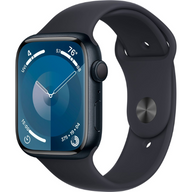
But if you’re just hitting "Start" and hoping for the best, you’re only scratching the surface of what your device can actually do. A Plug Certified Apple Watch isn't just a digital stopwatch; it’s a highly sophisticated sports computer hiding in plain sight.
Whether you’re training for your first triathlon or simply trying to get more accurate data on your morning jogs, unlocking your watch's advanced features can completely transform your training. Let's dive into the settings, calibrations, and hidden metrics that will help you optimize your tracking for swimming, running, and cycling.
The Foundation: Calibration and Sensor Accuracy
Before you dive into custom intervals or complex metrics, you need to lay the groundwork. The golden rule of fitness data is simple: bad input equals bad output.
Your Apple Watch relies on a complex network of sensors—including GPS, a heart rate monitor, an accelerometer, and a gyroscope—to calculate your effort. If you're wondering about gyroscope test reliability refurbished device checks, you can rest easy knowing that devices certified by Plug undergo rigorous testing to ensure every sensor performs like new.
However, even perfect sensors need to get to know you.
How to Calibrate Your Device
Calibration teaches your watch your specific stride length and movement patterns at different speeds. Here’s how to set your baseline:
- Put on your watch and head to a flat, open outdoor area with excellent GPS reception.
- Open the Workout app and select Outdoor Walk or Outdoor Run.
- Walk or run at your normal, consistent pace for exactly 20 minutes.
By doing this, your watch learns your personal biomechanics. When you inevitably run in areas with poor GPS signals (like dense forests or city areas with tall buildings), your watch will seamlessly fall back on this calibrated accelerometer data to keep your pace and distance highly accurate.
Tailoring Your Watch for the "Big Three"
Once your baseline is set, it’s time to optimize for your specific sport. The way your watch calculates effort in a swimming pool is vastly different from how it tracks a steep cycling climb.
Running: Harnessing Power and Zones
For runners, pace and distance are familiar friends. But if you want to train smarter, you need to look at Running Power and Heart Rate Zones.
- Heart Rate Zones: Instead of just guessing how hard you’re working, your watch automatically calculates your five heart rate zones based on your health data. Training in Zone 2 builds endurance, while Zone 5 improves your sprint capacity. You can edit your workout views to keep this gauge front and center.
- Running Power: Measured in watts, running power is a real-time measure of your effort. Pace can be deceiving—running an 8-minute mile uphill is vastly harder than running it downhill. Power accounts for elevation and speed, giving you a singular number to target for a consistent effort.
Cycling: Integrating Bluetooth Accessories
Cyclists have long relied on dedicated bike computers, but recent watchOS updates have turned the Apple Watch into a formidable cycling companion.
The secret here is third-party Bluetooth integration. You can now connect Bluetooth-enabled cadence sensors, speed sensors, and even power meters directly to your watch.
- Head to Settings > Bluetooth on your watch to pair your cycling accessories.
- Once paired, metrics like RPM (revolutions per minute) and cycling power will seamlessly populate in your Workout app.
Additionally, your paired iPhone will automatically turn into a live cycling dashboard. You can mount your iPhone to your handlebars and view your watch's real-time metrics right on the screen—a massive win for road safety and data visibility.
Swimming: Overcoming Water Resistance Challenges
Water is notorious for disrupting wireless signals, which means GPS tracking during open-water swims can be inherently tricky.
For Pool Swims, your watch relies entirely on its accelerometer to count your strokes and turns. Before you start, the watch will ask for the pool length. Do not skip this step. It is the sole metric the watch uses to calculate your distance.
For Open Water Swims, the watch only captures a GPS signal during the brief moment your arm breaks the surface of the water. To optimize accuracy, use a freestyle stroke and ensure your watch hand fully clears the water.
A quick tip: The moment you start a swim workout, your watch automatically engages the Water Lock feature, disabling the touchscreen to prevent accidental splashes from pausing your workout. To end the workout, press and hold the Digital Crown to eject the water from the speaker and unlock the screen.
Advanced Mastery: Building Custom Workouts
If you are just figuring out how to track workout on Apple Watch, the native open goals are a great start. But the true "aha" moment for athletes comes when utilizing the Custom Workout builder.
Instead of staring at your wrist to see when you've hit a mile, you can program your watch to guide you through complex interval sessions.
How to create a custom interval session:
- Open the Workout app and tap the three dots (…) next to your chosen activity.
- Scroll to the bottom and tap Create Workout, then select Custom.
- Add a Warmup, define your Work intervals (e.g., Run 400 meters), and your Recovery intervals (e.g., Recover for 90 seconds).
- Add a Cooldown.
Your watch will now tap your wrist with haptic feedback to tell you exactly when to sprint and when to recover. You can even set target alerts—for example, prompting the watch to buzz if your cadence drops below 160 SPM (steps per minute) or if your heart rate spikes out of Zone 3.
The Swim Customization Gap
It’s worth noting that while running and cycling have robust custom interval builders natively, advanced swimmers might find the native swim features slightly limiting for complex drill sets. If you require highly complex swim logic (like tracking kickboard drills where your arms don't move), integrating highly-rated third-party apps like MySwimPro will bridge that gap flawlessly while still syncing directly with your Apple Health data.
Frequently Asked Questions
Does water damage the sensors over time?Your watch is highly water-resistant, but it's not waterproof forever. Using the Water Lock feature ejects water from the speaker grille. To maintain longevity, rinse your watch with fresh water after swimming in a chlorinated pool or saltwater.
How do I track a triathlon or multisport event?You don't need to stop and start separate workouts! Simply select the Multisport workout type. The watch uses advanced motion sensors to automatically detect when you transition from swimming to biking to running, seamlessly recording your transition times in the process.
Why is my battery draining so fast during long workouts?Continuous GPS and heart rate tracking require significant processing power. If you're tackling an Ironman or ultra-marathon, toggle on Low Power Mode in your settings to preserve battery life while maintaining essential tracking. Starting your journey with a certified Plug device also ensures you are getting a battery that has been thoroughly vetted for optimal health and longevity.
Your Next Steps in Fitness Tracking
Your fitness journey is uniquely yours, but you don't have to navigate it blindly. By taking a few minutes to calibrate your stride, pair your cycling sensors, and build custom interval routines, you transform your Apple Watch from a simple activity logger into a dedicated digital coach.
As you become more comfortable with these settings, try experimenting with third-party app integrations like Strava or TrainerRoad to dive even deeper into your performance analytics. And remember, peace of mind is just as important as accurate data—which is why every watch we offer is backed by Plug's 12-Month Warranty.
Take your time exploring these settings before your next workout. You might be surprised to find that the ultimate training partner has been sitting on your wrist all along.


