


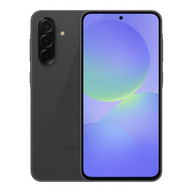










Is the Tensor G3 Chip in a Refurbished Pixel 8 Still a Powerhouse for Gaming & AI?
Updated on | 8 mins readIs the Tensor G3 Chip in a Refurbished Pixel 8 Still a Powerhouse for Gaming & AI?
Picture this: You’re standing in a digital showroom, scrolling through specs for your next smartphone. You see terms like "Snapdragon," "A17 Pro," and "Tensor G3" thrown around like sports statistics. If you’re like most people, you just want to know one thing: Will this phone handle my life without stuttering?
When looking at the Google Pixel 8—specifically a certified pre-owned model—the conversation often shifts to its brain: the Google Tensor G3 chip. There is a lot of noise online about benchmarks and raw speed, but numbers on a spreadsheet rarely tell the whole story of how a phone feels in your hand.
If you are considering a move to the Pixel ecosystem, or wondering if a refurbished flagship can truly keep up with modern demands, you need to look beyond the jargon. Let’s decode what the Tensor G3 actually does, how it differs from the competition, and whether it stands the test of time (and gaming).
The Philosophy: Why "Smart" beats "Fast"
To understand the Tensor G3, you have to understand Google’s goal. Most chip manufacturers are in a race to build the strongest muscle car—the engine with the most raw horsepower. Google, conversely, decided to build a self-driving electric vehicle. It isn't trying to win a drag race; it's trying to get you to your destination safer, smarter, and more comfortably.
The Tensor G3 is an "AI-first" processor. While competitors focus on pushing frame rates to the absolute limit, Google designed the G3 to handle complex machine learning tasks directly on the device. This architecture prioritizes tasks like translating languages in real-time, filtering out spam calls before your phone rings, and editing objects out of photos instantly.

Does Silicon "Age"?
One of the most common questions we hear at Plug Tech regarding pre-owned devices is: "Does the processor get slower because the phone is used?"
The short answer is no. Unlike a battery, which relies on chemical reactions that degrade over time, a silicon chip like the Tensor G3 is solid-state hardware. It does not wear out from use. A Tensor G3 chip in a refurbished Pixel 8 performs exactly the same math at exactly the same speed as a chip in a brand-new unit unboxed today.
Gaming Performance: The Honest Truth
Let’s address the elephant in the room: Mobile Gaming. If you scour forums like Reddit or read deep-dive reviews, you might see gamers debating thermal throttling and frame rates. Here is the reality for the average user.
The Tensor G3 is not marketed as a dedicated gaming chip, but that doesn't mean it can't play. It handles popular titles like Call of Duty: Mobile, PUBG, and Genshin Impact competently. However, because Google prioritized AI and efficiency over raw graphical brute force, hardcore gamers might notice differences during marathon sessions.
The "Throttling" Concept Explained
When a processor works hard, it generates heat. To protect itself, the chip slightly lowers its speed to cool down—this is called "throttling." The Tensor G3 is designed to throttle sooner than some gaming-specific phones to maintain a comfortable device temperature.
- Casual Gamers: If you play Candy Crush, Subway Surfers, or 30-minute sessions of shooters, the experience is buttery smooth.
- Hardcore Gamers: If you are playing Genshin Impact at maximum settings for three hours straight, you might see the frame rate dip slightly to keep the phone cool.
For 90% of users, the performance is more than enough. The device feels snappy, responsive, and fluid.

The AI Superpower: Where Tensor G3 Shines
This is the "aha moment" for Pixel owners. The reason you choose a Google Pixel 8 isn't just to open apps quickly—it's for the features that other phones simply cannot do.
The Tensor G3 features a next-generation TPU (Tensor Processing Unit). Think of the CPU as the general manager and the TPU as the creative genius. This specialized part of the chip handles AI tasks efficiently without draining your battery.
Real-World Magic Moments
- Best Take: Have you ever taken a group photo where one person blinked? The Tensor G3 analyzes a burst of photos and allows you to swap faces seamlessly, creating the perfect shot. This isn't cloud magic; it happens right on your phone.
- Audio Magic Eraser: Recorded a video at a windy beach? The chip can identify and separate sounds, allowing you to turn down the wind noise while keeping your voice crystal clear.
- Call Screen: The G3 listens to incoming calls, transcribes the caller's request in real-time, and lets you answer or block them without ever picking up.
These features rely on the specific architecture of the Tensor G3. This is why a certified pre-owned Pixel 8 remains a powerhouse—its value lies in its intelligence, not just its clock speed.

Why "Refurbished" is the Smarter Choice for Pixel
When you combine the durability of solid-state processors with Google's unprecedented software support, the argument for buying new diminishes. Google has promised 7 years of OS and security updates for the Pixel 8 series. This means a refurbished Pixel 8 isn't just "good for now"—it is supported until 2030.
At Plug Tech, we bridge the gap between "used" and "reliable." Because we rigorously test the hardware, you get the full capabilities of the Tensor G3—the AI photo editing, the live translation, and the smooth interface—at a fraction of the original MSRP. It’s a way to access flagship intelligence without the flagship tax.
Frequently Asked Questions
1. Does the Pixel 8 overheat while gaming?
The Pixel 8 with Tensor G3 can get warm during intensive tasks like 4K video recording or heavy 3D gaming. This is normal behavior for modern smartphones as they dissipate heat through the body of the phone. It rarely reaches a point where it is uncomfortable or dangerous to the device.
2. Is the Tensor G3 better than the Snapdragon 8 Gen 3?
It depends on what you value. In raw benchmark scores (like Geekbench), the Snapdragon often wins. However, in "smarts"—voice recognition speed, image processing, and on-device AI—the Tensor G3 is often superior. It is designed for utility, not just benchmarks.
3. Will a refurbished Pixel 8 have a worse battery life?
Not at Plug Tech. While processors don't degrade, batteries do. That is why our certification process includes rigorous battery health checks to ensure the device you receive meets high performance standards, getting you through your day comfortably.
4. Can the Tensor G3 handle video editing?
Absolutely. The chip is optimized for video processing, allowing features like "Video Boost" (on Pro models) and seamless 4K editing directly in the Google Photos app.
The Verdict
The Tensor G3 isn't trying to be the strongest chip in the world; it's trying to be the most helpful.
If you are looking for a device that learns from you, filters out the noise of daily life, and provides flagship-level photography, the Pixel 8 remains an incredible contender. And because silicon doesn't age, a refurbished model delivers that same "wow" factor as the day it launched.
Ready to experience the smartest chip in the room? Explore our curated collection of the Google Pixel 8 and see how much you can save while upgrading your tech.


